

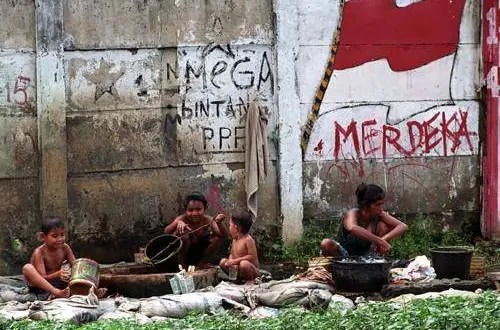
Indonesia is turning 81. Every year, Independence Day gives us a reason to celebrate our history, honor those who sacrificed their lives for the country, and appreciate how far Indonesia has come. We should be proud that Indonesia has remained a sovereign nation through enormous political, economic, and social changes. Yet an anniversary should not only be a celebration. It should also be a moment of reflection. After 81 years, we should be mature enough to look beyond ceremonies, flags, slogans, and patriotic speeches and ask a more difficult question: how much of the independence proclaimed in 1945 is actually felt by ordinary Indonesians in their everyday lives?
Free from Colonialism, But Are We Free from Injustice?
Independence was never meant to be merely freedom from foreign colonial rule. The deeper meaning of independence is the freedom of people to live with dignity, security, opportunity, and justice. A country may be politically independent while many of its citizens remain economically vulnerable, socially marginalized, or afraid to speak openly. If people struggle to find decent employment, if families are increasingly pressured by the cost of living, if farmers remain uncertain about their land, if public criticism is treated as a threat, or if access to economic opportunity is determined by proximity to power, then we must have the courage to admit that the work of independence is not finished.
This is why the meaning of independence must continually be measured against the daily reality of the people. Independence should not simply be celebrated as a historical achievement; it should be experienced as a living condition. A citizen should be able to feel that the state protects his or her dignity, provides a fair opportunity to work and prosper, and respects the fundamental right to speak, disagree, and participate in public life. If those conditions remain unevenly distributed, then our national celebration should also become a national reflection.
Economic Pressure: When Growth Does Not Always Feel Like Progress
One of the most uncomfortable issues today is the economic pressure experienced by ordinary people. Government statistics may show economic growth, investment figures, inflation rates, and fiscal indicators, but people experience the economy in much simpler ways. They ask whether their salary is enough to support their family, whether their jobs are secure, whether they can afford food and healthcare, whether they can pay their children’s education, and whether they can save something for the future. These questions are not captured completely by macroeconomic indicators. A strong economy should ultimately be measured not only by the health of national accounts but also by whether ordinary families feel more secure about their future.
The gap between macroeconomic narratives and household experience deserves serious attention. It is entirely possible for an economy to grow while some groups experience declining purchasing power, insecure employment, or rising financial pressure. This does not necessarily mean that economic policy has failed, but it does mean that headline indicators should never become an excuse to ignore what people experience on the ground. An economy exists to serve people, not the other way around. If growth does not translate into broader opportunity, decent employment, and greater economic security, then policymakers must have the humility to ask what needs to change.
Government Debt: Not Just a Number, but a Public Responsibility
The issue of government debt deserves the same kind of honest discussion. Debt is not inherently wrong. Countries around the world use borrowing to finance infrastructure, public services, and long-term development. The real question is whether the debt creates sufficient economic and social value to justify the burden it creates. Indonesia’s government debt has continued to rise, reaching around Rp9,920 trillion in March 2026, while the government has maintained that the debt-to-GDP ratio remains within a manageable range.
The public, however, has the right to ask a deeper question: what are we getting in return for this debt? Every rupiah borrowed today creates an obligation that will eventually be carried by the public. Debt can be justified when it builds productive capacity, creates jobs, improves human capital, strengthens infrastructure, and expands the country’s future economic capacity. But debt should never become a substitute for discipline, efficiency, or sound public financial management. The government has a responsibility not only to ensure that debt remains technically manageable, but also to demonstrate that borrowed resources are being converted into sustainable public value.
The current generation may enjoy the benefits of development, but the next generation should not be left with nothing but the bill. Borrowing for the future can be responsible; borrowing without sufficient value creation is simply postponing today’s problems to tomorrow.
Layoffs: Behind Every Number Is a Human Being
The situation in the labor market makes these concerns even more human. Tens of thousands of Indonesian workers have experienced layoffs during the first half of 2026. Behind every number is a human being with a family, financial obligations, personal hopes, and plans for the future. A layoff is not simply an entry in a government report or a business restructuring decision. It can mean a child whose education becomes uncertain, a family that can no longer afford its normal standard of living, or a worker who suddenly has to start again after years of employment.
When layoffs increase, government policy should therefore go beyond asking businesses to remain optimistic. The country needs stronger policies that help companies remain competitive while protecting workers from becoming the easiest and most immediate cost to cut. When layoffs are unavoidable, displaced workers should not be left to navigate the crisis alone. They need meaningful access to reskilling, employment opportunities, social protection, and a realistic path back into productive work.
The dignity of work should remain at the center of economic policy. Workers are not merely production costs, and employment is not merely a line in an economic report. A job is often the foundation upon which an entire family builds its future. Protecting employment, therefore, is not simply a labor issue; it is a national economic and social responsibility.
Do Not Measure the Economy Only from the Top
Governments have sophisticated economic indicators: GDP growth, inflation, investment, fiscal deficits, debt ratios, and foreign reserves. But ordinary families have their own indicators, and they are much simpler. They ask: Can I afford my groceries? Is my job secure? Can I pay my children’s school expenses? Can I afford healthcare? Can I save anything at the end of the month?
If macroeconomic indicators look healthy while families feel increasingly squeezed, the government has a responsibility to listen and reassess. This does not mean dismissing economic data; it means recognizing that national economic performance has both a statistical dimension and a human dimension. Both must matter.
The purpose of economic development is not to make statistics look impressive. The purpose of economic development is to make people’s lives better. When there is a significant gap between what the government says about the economy and what citizens experience in their daily lives, that gap should not be dismissed as public pessimism. It should be treated as a signal that deserves serious attention.
Regional Autonomy: Efficiency Must Not Become Another Burden
Fiscal relations between the central government and the regions provide another important test. Indonesia is a vast country, and decisions made in Jakarta can have very different consequences in a remote district, village, or community. Changes in Transfer to the Regions can affect the ability of local governments to maintain roads, schools, health facilities, social programs, and other basic services.
Fiscal efficiency is important, but efficiency must not simply mean transferring the consequences of budget constraints from the central government to local governments and, ultimately, to citizens. Regional autonomy should be meaningful enough to allow local governments to respond to the actual needs of their communities. National fiscal discipline and local public service quality must therefore be balanced carefully rather than treated as competing objectives.
A road that is not maintained, a health facility that lacks resources, or a local school that cannot provide adequate services may seem insignificant from a national budget perspective. For the people who depend on those services, however, they are not insignificant at all. The closer a government is to the people, the more directly its budget decisions are felt.
Development Must Never Become an Excuse to Ignore People
Another issue that deserves greater courage is the evaluation of government programs and large-scale development projects. Criticizing a government project does not automatically mean opposing development. In a democracy, public projects should be questioned precisely because they are funded, directly or indirectly, by the public. Citizens have the right to know how much a project costs, who benefits from it, how many jobs it creates, what economic value it generates, what its social and environmental consequences are, and whether the results justify the resources invested.
A successful program should be strengthened. A program with weaknesses should be improved. A program that repeatedly fails to achieve its objectives should be reconsidered. No government program should be so politically important that it becomes immune from objective evaluation. The strength of a government is not demonstrated by its ability to defend every policy. It is demonstrated by its ability to recognize mistakes, listen to criticism, and correct its course.
This principle should apply to every major program, regardless of how politically popular or strategically important it may be. Public money demands public accountability. If a program is genuinely beneficial, transparent evaluation will strengthen public confidence. If it is ineffective, evaluation provides an opportunity to improve it. What should concern us is not criticism itself, but a political culture in which questioning public policy is treated as disloyalty.
Corruption and KKN: A Betrayal of Public Trust
The fight against corruption, collusion, and nepotism is equally central to the meaning of independence. Corruption is not simply a legal violation committed by individuals. It represents a breach of public trust and a direct reduction in the resources available to society. Every rupiah lost through corruption is a rupiah that could have supported education, healthcare, infrastructure, social protection, or other public needs.
Indonesia therefore needs more than declarations of commitment to clean government. It needs institutions that are transparent, oversight mechanisms that are effective, law enforcement that is consistent, and a political culture in which public office is understood as a responsibility rather than an opportunity for personal enrichment. The law must not become harsh toward the weak and accommodating toward the powerful. If people believe that justice depends on who they are, whom they know, or how much influence they possess, then the problem is much larger than corruption itself. It becomes a crisis of public trust in the state.
A country cannot claim to have achieved meaningful independence if public resources can still be captured by a small group through political connections or abuse of authority. The struggle against corruption is therefore not simply a legal agenda. It is part of the unfinished struggle to make the republic fairer.
Land and Natural Resources: Development Must Include the People
Indonesia is extraordinarily rich in natural resources, yet the existence of wealth does not automatically guarantee equitable prosperity. Agrarian conflicts, disputes over land, and unequal access to natural resources continue to affect communities in different parts of the country. For farmers and rural communities, land is not simply a financial asset. It is their home, livelihood, identity, and inheritance for their children.
Indonesia needs investment and economic development, but development cannot be considered successful if communities lose their means of living without receiving a fair and sustainable future in return. Agrarian reform therefore needs to be understood more broadly than administrative land certification. It should address the deeper questions of who controls land, who benefits from its economic value, how conflicts are resolved, and whether local communities have a meaningful voice in decisions affecting their lives.
Development should change people’s lives for the better, not simply change the ownership and control of resources. If economic growth creates wealth but leaves communities feeling displaced, unheard, or excluded, then policymakers need to reconsider whether the development model is truly delivering social justice.
The State Must Be Present When People Face Disaster
The meaning of independence is also tested when citizens face disaster. When communities lose homes, livelihoods, family members, or access to basic services because of natural disasters, the state must respond with more than statements and ceremonial visits. Government institutions must provide timely evacuation, healthcare, food, shelter, infrastructure recovery, livelihood support, and a clear path toward reconstruction.
Disaster classification and emergency policies should be based on objective assessments of the scale of the crisis and the needs of affected communities, rather than political considerations. What matters most is speed, coordination, transparency, and whether victims actually receive the assistance they need.
For a family that has lost its home, a government announcement means very little if food does not arrive, healthcare is inaccessible, or the means to rebuild a livelihood are absent. The presence of the state must be felt not only in official statements, but in the concrete support received by citizens when they need it most.
Security Forces Must Protect the People, Not Intimidate Them
The Indonesian military and police have important responsibilities in protecting national sovereignty, public safety, and social order. But precisely because they hold significant authority, there must be equally strong safeguards to ensure that their power remains within the boundaries of law and democratic principles.
Civilian space must remain open for citizens to express opinions, organize peacefully, criticize government policies, and demand accountability. Criticism is not an enemy of the state. It is one of democracy’s mechanisms for preventing the abuse of power. A confident government does not need to fear citizens who ask difficult questions. In fact, a healthy government should be more concerned when citizens stop asking questions altogether.
Silence does not necessarily mean satisfaction. Sometimes it means disappointment. Sometimes it means distrust. And sometimes it means fear. A democratic state should never allow fear to become the reason citizens choose not to speak.
Independence Must Not Become a Privilege of the Elite
Perhaps this is the most uncomfortable question we should ask on Indonesia’s 81st Independence Day: could it be that political independence belongs to everyone, while economic opportunity and influence remain concentrated among those who already possess wealth, connections, or access to power?
Indonesia was not founded to become a country where prosperity is reserved for those closest to power. It was founded as a common home, where the state exists to protect the dignity and welfare of its citizens. Every major policy should therefore be examined through a simple but powerful question: does this policy expand opportunity for ordinary people, or does it primarily expand the power and privilege of those who are already strong?
This question is not an attack on the government. It is an expression of democratic responsibility. A government should be strong enough to accept criticism, confident enough to explain its decisions, and humble enough to correct them when evidence shows that change is necessary.
Patriotism Does Not Mean Blind Approval
These questions should not be interpreted as hostility toward the government or the state. On the contrary, asking them is an expression of citizenship. A democratic society needs citizens who are willing to respect the government while also holding it accountable. Patriotism should not mean unconditional approval of every government decision. Loving Indonesia means caring enough to criticize it when something is wrong and supporting it when something is right.
The state belongs to the people, and government is a public trust. Political parties, bureaucrats, business leaders, and public officials are temporary custodians of that trust; they are not its owners. A citizen who asks difficult questions is not necessarily less patriotic than a citizen who applauds. Sometimes, the most patriotic act is to remind those in power that their authority ultimately comes from the people.
81 Years Later: Less Automatic Applause, More Honest Reflection
As Indonesia celebrates 81 years of independence, perhaps we need less automatic applause and more honest reflection. We should have the courage to acknowledge that poverty still exists, corruption remains a serious challenge, inequality has not disappeared, many workers face uncertainty, and some public policies require serious evaluation. Admitting these realities does not diminish Indonesia. It demonstrates maturity.
A nation becomes stronger not when it pretends that its problems do not exist, but when it has the courage to confront them openly and improve itself. We should be proud of what Indonesia has achieved, but pride must never become an excuse for complacency. The red-and-white flag should remind us not only of how far we have come, but also of the responsibilities that remain.
Independence Is Still a Work in Progress
The greatest respect we can give the red-and-white flag is not simply to stand beneath it during a ceremony. It is to defend the values represented by that flag in our daily decisions and institutions. It means building a country where economic growth creates meaningful opportunities, where workers are treated with dignity, where farmers and communities are protected, where public money is managed responsibly, where corruption is punished regardless of status, where citizens can speak without fear, and where government power remains accountable to the people.
After 81 years, Indonesia has every reason to be proud of what it has achieved. But pride must never become complacency. Independence is not a finished achievement that can simply be celebrated every August. It is a responsibility that must be renewed by every generation. We must continue the struggle for freedom from poverty, corruption, injustice, inequality, fear, and abuse of power.
The question we should ask today is therefore not simply, “How many years has Indonesia been independent?” The more important question is, “How much of that independence can an ordinary Indonesian actually feel in everyday life?”
If a worker still fears losing his or her job, if a family struggles to meet basic needs, if a farmer worries about losing access to land, if citizens hesitate to speak honestly, or if public power escapes meaningful accountability, then our journey is not over. Indonesia is independent, but the work of making that independence meaningful for every citizen continues.
Happy 81st Independence Day, Indonesia. May we never become so proud of our independence that we forget to ask whether everyone is truly experiencing it. Independence is not simply freedom from colonial rule. It is the freedom to live with dignity, to work with hope, to speak without fear, to receive justice, and to believe that this country truly belongs to all of us. That is the independence we must continue to build—and the independence we owe to the next generation.
