

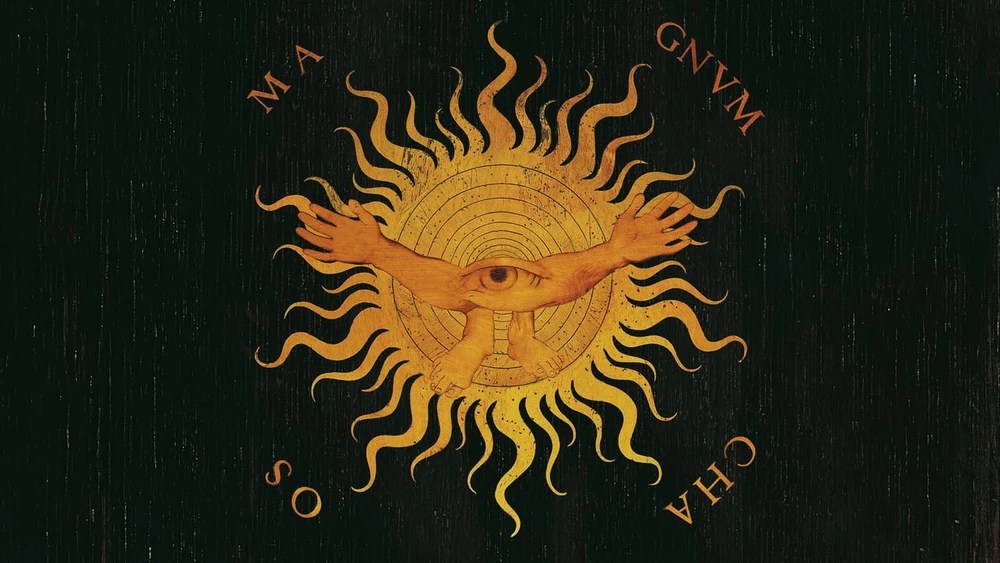
In Greek mythology, Chaos was the primordial void from which all creation emerged. It was not the chaos we typically imagine today—a state of disorder and confusion—but rather the raw, formless, and boundless potentiality that existed before the cosmos took shape. From this Chaos, according to Hesiod’s Theogony, came the first deities: Gaia (Earth), Tartarus (the Abyss), and Eros (Love), among others. These primordial forces set into motion the creation of the Universe, transforming the void into an ordered cosmos through the interplay of these emerging powers.
This ancient notion of Chaos can be seen as a profound metaphor for the tension between order and disorder that pervades existence. Chaos, in this sense, isn’t merely a state of confusion; it is the ground of potential, from which all creation arises. It speaks to the possibility of transformation, where order emerges from chaos over time, and where new forms of existence are birthed out of uncertainty. This philosophical concept holds relevance in the modern world, where both the sense of order and chaos coexist, and we must navigate this dynamic balance.
The true state of the Universe, in both a cosmic and contemporary context, is a complex interplay of both order and chaos. At large cosmological scales, there is order—gravity governs the motion of stars, planets, and galaxies, creating predictable patterns and cycles. But on smaller scales, particularly in quantum mechanics, there is randomness and uncertainty, where particles behave probabilistically, and deterministic outcomes break down.
In today’s world, this coexistence of order and chaos is felt more acutely. Globalization, technological advancements, and interconnectedness have created a dynamic, often unpredictable environment. Small events can trigger far-reaching consequences, amplifying a sense of chaos. Moreover, political fragmentation, the unpredictability of climate change, and the overwhelming flood of information in our digital age contribute to a growing perception of disorder.
Yet, amid this chaos, there are efforts to restore order. Many of the challenges we face, such as environmental degradation or political instability, are being met with new forms of collaboration, innovation, and resilience. These efforts reflect the same philosophical tension found in ancient Chaos: the idea that from potential disorder, new systems of balance can emerge.
Philosophers from various schools of thought have provided insights that can guide us in making sense of the chaotic world and finding ways to act meaningfully within it.
The ancient Stoics, particularly philosophers like Epictetus and Marcus Aurelius, believed that while we cannot control external events, we can control our responses to them. Stoicism teaches that chaos is an inherent part of the natural world, but we can find peace by accepting what we cannot change and focusing on cultivating inner virtue. In the face of uncertainty, Stoicism encourages individuals to focus on their own character, cultivating resilience, wisdom, and equanimity in times of disruption. The Stoic ideal of flourishing through adversity suggests that humans can respond to chaos not with fear or resistance, but with a calm, purposeful engagement with the world.
Existentialist thinkers like Jean-Paul Sartre and Albert Camus grappled with the absurdity and meaninglessness of existence in a chaotic world. According to existentialism, the Universe does not provide inherent meaning, and it is up to humans to create their own purpose through action and choice. This philosophy encourages embracing freedom and responsibility, recognizing that the chaos of life offers an opportunity to create meaning. For contemporary humans, this suggests that in the face of global uncertainty, we can actively shape our own lives and contribute to broader societal change by choosing actions that align with our values.
Taoist philosophy, with its emphasis on the “Tao” (the Way), offers another perspective on navigating chaos. The Taoists view the flow of the Universe as a natural process of constant change, where order and disorder are part of the same dynamic rhythm. The concept of “Wu Wei” (non-action or effortless action) teaches that instead of fighting against chaos, one should align oneself with the natural flow of events. In this view, humans should respond to chaos by adapting fluidly, acting in harmony with the natural world, and cultivating balance within themselves. This approach suggests that we need not impose rigid structures in a world of complexity, but rather engage in a more harmonious and responsive way.
From a more contemporary standpoint, the framework of systems thinking, which is often attributed to thinkers like Peter Senge, emphasizes understanding interconnectedness and the patterns that underlie chaotic phenomena. Systems thinking is used in various fields to approach complex issues, such as climate change and societal instability, by considering the broader system at play. It recognizes that the world is composed of interrelated systems, and change in one part of a system can ripple through and affect the whole. Systems thinking encourages humans to take a holistic view, recognizing that chaos often arises from underlying patterns. By studying and understanding these patterns, we can better navigate complex problems such as climate change, political upheaval, or economic crises. In this way, chaos is not an isolated event but a signal that calls for a deeper understanding of interconnectedness and collective action.
Given these philosophical perspectives, how should humans respond to the chaotic world we live in today?
Much like the ancient deities emerging from the primordial Chaos, humans must cultivate adaptability. The world is constantly evolving, and the ability to respond flexibly to change is essential. As the Stoics suggest, we should focus on what we can control—our attitudes, our choices, and our actions—while embracing the uncertainty that is inherent in life.
Inspired by existentialist thought, individuals can find purpose in the midst of chaos by choosing to act in ways that align with their values. Whether through personal relationships, creative endeavors, or social activism, humans can create meaning in a world that may seem indifferent or chaotic.
Drawing from Stoicism and Taoism, one of the most important responses to chaos is to cultivate emotional resilience. In a time of global uncertainty, inner peace is a form of resistance to the overwhelming forces that may seem beyond our control. Practices like meditation, mindfulness, and self-reflection can help individuals maintain balance, despite the turbulence around them.
The interconnectedness of our world demands that we work together to address the challenges we face. Whether in terms of climate action, political dialogue, or technological regulation, cooperation is key. Just as systems thinking suggests, we need to address the root causes of chaotic phenomena collectively, understanding that individual actions contribute to larger systemic shifts.
Ultimately, the true state of the Universe, both in ancient myths and in modern reality, is not solely one of chaos or order, but a dynamic interplay of both. Just as Chaos in Greek mythology gave rise to the ordered cosmos, humans can respond to the challenges of today’s chaotic world by cultivating wisdom, resilience, and cooperation. By doing so, we not only survive the chaos but also shape the future, bringing new forms of order and meaning into being.
Reference:
- Aurelius, M. (2006). Meditations (G. Hays, Trans.). Modern Library.
- Sartre, J.-P. (1992). Being and Nothingness (H. Barnes, Trans.). Routledge.
- Camus, A. (2000). The Myth of Sisyphus (J. O’Brien, Trans.). Vintage.
- Laozi. (2009). Tao Te Ching (D. C. Lau, Trans.). Penguin Classics.
- Senge, P. M. (2006). The Fifth Discipline: The Art and Practice of the Learning Organization.
