

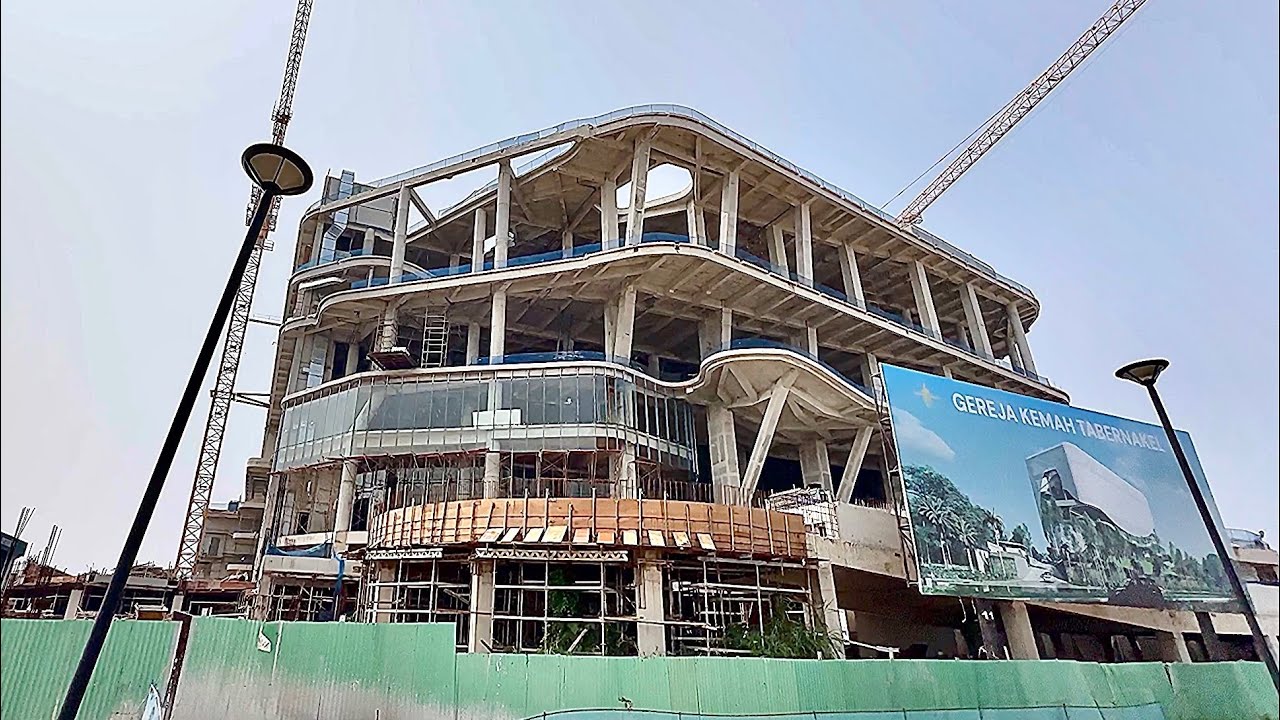
In every generation, the church is challenged to remember what it truly is. The phrase, “The Church is a hospital for sinners, not a museum for saints,” is not merely a comforting slogan—it is a prophetic reminder. A church that forgets its identity risks becoming something God never intended: a stage for image, a platform for prestige, or worse, a building more admired for its architecture than for the presence of Christ within it.
Today, in many growing urban areas—including modern developments like PIK2 in Jakarta—we see new church buildings rising: spacious, polished, beautifully designed, and sometimes undeniably luxurious. These structures attract attention, admiration, and occasionally confusion. They make us ask a deeper question: What, truly, is the church for? Are we building sanctuaries for the broken—or showrooms for the comfortable? Are we preparing places of healing—or centers for spiritual entertainment? Are our churches pointing people to Christ—or to ourselves? To discern our direction, we must look back to Jesus.
Jesus made His mission unmistakably clear: “It is not the healthy who need a doctor, but the sick… I have not come to call the righteous, but sinners.” This declaration reveals the heart of God. He moves toward the broken, not the polished. He seeks the guilty, not the self-righteous. He welcomes the outcast, not the elite. Whenever Jesus gathered people, the room was filled with messy lives—tax collectors, prostitutes, the sick, the shamed, the anxious, the demon-tormented, the lonely, the marginalized. They came because He made space for them. He never demanded they impress Him; He simply asked them to trust Him.
The early church embodied this same spirit. It was not luxurious, but it was full of love. It lacked grand architecture, but it overflowed with compassion. Its floors were humble, but its faith was powerful. The kingdom grows not by marble pillars, but by mercy.
This truth becomes even more important today, especially in places like PIK2 where multiple churches are rising almost simultaneously. Nafiri Discipleship Church, GBI Gilgal, and Tabernacle Church have all begun establishing their presence in this rapidly developing urban zone. Their buildings are new, fresh, well-designed, and created with modern facilities that match the aesthetic of PIK2’s vibrant, upscale city planning. Such developments naturally draw interest—and scrutiny. On one hand, these churches are stepping into a new region where thousands of people will live, work, and build new lives. On the other hand, they must navigate the temptation of becoming monuments of comfort instead of ministries of compassion.
Nafiri Discipleship Church (NDC), for example, has begun constructing a significant worship center in PIK2. The design is modern, spacious, and undeniably impressive. There is nothing inherently wrong with this. Excellence can honor God. Good facilities can serve families, youth, and community programs. But the deeper question remains: Will such a building become a place where the hurting feel welcome? Will it be a refuge for the sinner, the struggling, the weary? Or will it attract people seeking aesthetic comfort without seeking spiritual transformation?
GBI Gilgal, another church planting its roots in PIK2, faces the same crossroads. As part of a well-known and rapidly expanding network of congregations, GBI Gilgal has the opportunity to serve a diverse, growing community. But like any large church, it must guard its heart. A church can easily become a place where production, performance, and presentation overshadow humility, discipleship, and genuine care. The danger is subtle: when a church’s design and technology impress more loudly than its compassion and mercy, the message of Christ grows dim.
Tabernacle Church (GKT), also establishing a presence in PIK2, brings its own unique ministry DNA into this emerging district. As with the others, its facilities are modern and built to accommodate the needs of a new community. But regardless of style or size, its mission must remain anchored in the gospel—a commitment to healing, not showcasing; to embracing the broken, not entertaining the comfortable.
The rise of these three churches in PIK2 is not a problem in itself. In fact, it might be a blessing: a sign that God is planting seeds of hope in a new urban landscape. But their presence also calls all of us—leaders, members, and observers alike—to reflect deeply. If churches are built to reach the lost, serve the community, and provide spiritual refuge, then their buildings, however grand, are tools of grace. But if they exist to compete, to impress, or to maintain social status, then their foundations rest on sand.
Throughout Scripture, God is unambiguous about the church’s calling. It must be a place where the poor are honored, the lonely are surrounded, the sinner is forgiven, and the oppressed find justice. The prophets pleaded for worship built on compassion, not performance. Jesus taught that welcoming the least is welcoming Him. James described authentic faith as caring for widows and orphans. The early church shared so that no one was in need. This is the heartbeat of God. A church that forgets the poor has forgotten Christ. A church that ignores the broken has ignored its purpose. A church that caters only to the comfortable has ceased to be a church.
A church may gather in a mansion or a hut, a skyscraper or a storefront. Nafiri Discipleship Church, GBI Gilgal, and Tabernacle Church may build beautiful structures in PIK2. But they will become true churches of Christ not because of their architecture, but because of their hearts. They will honor God when they welcome sinners with open arms, love without discrimination, refuse to judge by appearance, stand with the forgotten, offer rest to the weary, heal the brokenhearted, speak truth with humility, serve their community with compassion, and point everything back to Jesus. When these things are present, even the simplest building becomes holy ground. When they are absent, even the grandest cathedral is spiritually empty.
The church exists for one glorious, humble mission: to bring the sick to the Savior, the broken to the Healer, and sinners to Grace. Whether the building is small or large, simple or luxurious, traditional or modern, its faithfulness is measured by this: Do people encounter the love of Christ here? Do the broken feel safe here? Do the poor feel honored here? Do sinners find mercy here? Do the lonely find family here? Do the suffering find comfort here?
If the answer is yes, then the church—whatever its appearance—has remembered its purpose. If not, then it is time to return to the Great Physician, who alone can make His house a true hospital for the soul.
