

Abstract
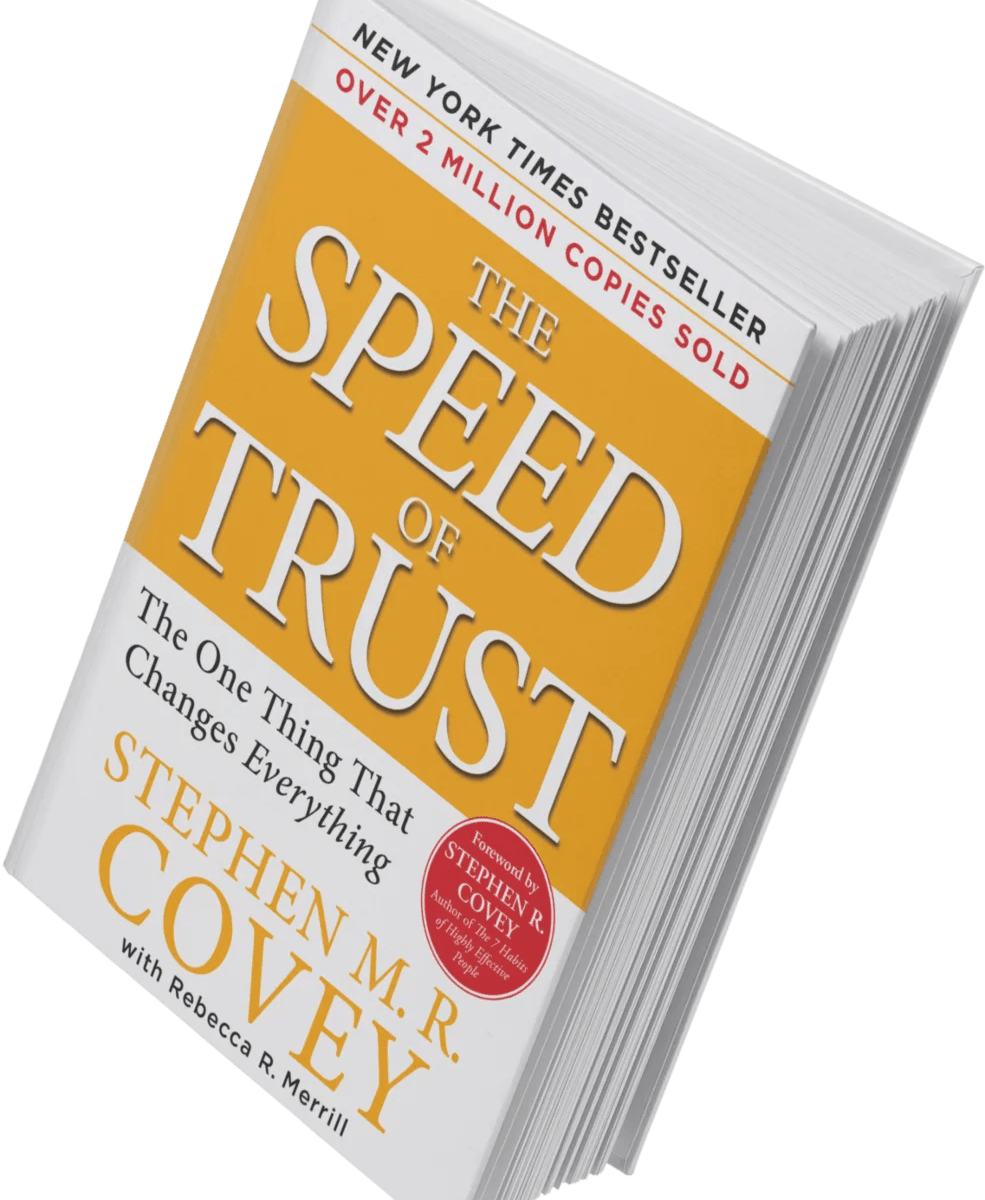
Stephen M.R. Covey’s The Speed of Trust offers an individualistic framework for building trust in personal and professional settings. However, this approach is considered overly idealistic and neglects crucial structural dynamics, power relations, and cultural factors that influence trust formation. This article critically examines Covey’s concept of trust using perspectives from sociology, organizational studies, and leadership. The study underscores the importance of a dual approach combining personal and systemic dimensions to achieve sustainable, inclusive, and equitable trust-building.
1. Introduction
Trust is a fundamental component of various forms of social relationships, ranging from interpersonal to organizational and societal levels. In management and leadership contexts, trust is often regarded as a catalyst that accelerates collaboration, innovation, and work effectiveness (Covey, 2006). The Speed of Trust introduces a paradigm of trust-building through changes in individual behavior and character, emphasizing integrity, competence, and goodwill as primary pillars.
Although Covey’s approach is popular among business practitioners and leadership trainers, significant criticism has arisen from academics and practitioners who argue that such an individualistic focus inadequately captures the social and structural complexities that constrain individual agency. In real organizations, trust is shaped not only by individuals but also by social, cultural, and political contexts influencing relationships and interactions among members. This critique is vital to avoid oversimplification that obscures our understanding of trust in practice.
This article aims to critically review Covey’s approach by drawing on literature from various disciplines including the sociology of trust, organizational theory, and leadership studies. Additionally, it discusses the relevance of Covey’s approach across cultures, considering that the Western values dominant in the book do not always align with diverse global social norms.
2. Theoretical Framework and Cultural Context
2.1 Covey’s Individualistic Paradigm
Stephen M.R. Covey builds his trust theory on the idea that trust can be accelerated and strengthened through enhancing individual credibility. According to Covey, trust is a strategic asset that can reduce transaction costs, speed up business processes, and increase productivity (Covey, 2006). This approach aligns with American managerial culture that positions the individual as the primary agent of change and value creation through proactivity and personal responsibility (Covey, 1989).
The concept of speed of trust refers to the speed and quality of cooperation that occurs when trust levels are high, making work processes more efficient with less supervision or friction. Covey proposes 13 habits or principles that can build trust, ranging from integrity and consistency to effective communication skills. This approach is practical and provides a clear framework easily understood and applied in various contexts.
However, the main limitation of this approach is that Covey tends to overlook the social and structural conditions that limit individuals’ ability to implement these principles. In many organizations and societies, the freedom for individuals to act autonomously is uneven; hierarchical structures, norms, and power systems determine who can build and maintain trust.
2.2 A Multidimensional Perspective on Trust
In sociological studies, trust is viewed as a complex, multidimensional social phenomenon. Niklas Luhmann (1979) sees trust as a mechanism to reduce complexity and uncertainty in social interactions. Trust enables individuals to take risks in uncertain relationships without having to scrutinize every possible outcome.
Hardin (2002) adds that trust is relational and contextual, meaning it is not enough for one party to have goodwill; trust is built through experience and the context of the relationship. Fukuyama (1995) links trust to cultural values and social institutions, asserting that trust is a cultural product rooted in prevailing social norms.
In organizations, Mayer, Davis, and Schoorman (1995) developed an integrative model of trust combining three key elements: ability, benevolence, and integrity. They also emphasize that organizational structural context and leadership affect the level of trust formed. This indicates that trust is not just about individuals but also about organizational structure and culture.
2.3 Critique of the Individualistic Approach
Critics such as Alvesson and Spicer (2012) and Eikhof and Warhurst (2013) argue that individualistic approaches often ignore organizations as political arenas rife with power inequalities. They warn that focusing solely on individual behavior distracts from the need to change organizational structures that generate distrust.
Covey’s concepts of the circle of influence and circle of concern (Covey, 1989) encourage individuals to focus only on what they can control, avoiding issues beyond their control. However, in complex organizations, these boundaries are often blurred. This can cause frustration and powerlessness, especially among subordinates lacking real authority.
3. Criticisms of The Speed of Trust
3.1 Idealism in Interpreting Trust
A fundamental criticism is that Covey assumes equal freedom and opportunity for all individuals to build trust. In reality, structural inequalities limit these opportunities. Factors such as hierarchical position, access to information, organizational politics, and workplace culture play significant roles in determining one’s ability to build trust.
For example, in high-pressure, tightly hierarchical work environments, even well-intentioned individuals may struggle to build trust if the system does not support it. Trust here is not merely a matter of personal integrity but involves institutional reforms enabling mutual trust to flourish.
3.2 Overemphasis on Individuals and Neglect of Structural Factors
Covey advocates change through improving individual credibility and behavior. Yet, failures to build trust often stem from ambiguous organizational policies, unfair reward systems, or inconsistent leadership styles. Focusing only on individuals closes off opportunities to reform systems that breed distrust.
In many organizations, internal conflicts and power politics dominate and limit individuals’ agency. Therefore, effective trust-building requires changes not only in individuals but also in systems, processes, and organizational policies.
3.3 The Circle of Influence and Circle of Concern
This concept, which separates individual focus on what can and cannot be controlled, is useful in personal stress management. However, in complex organizations, this distinction is often unclear. Factors like corporate culture, social norms, and power relations can obscure individual boundaries of control.
By emphasizing personal responsibility, this concept risks oversimplifying social problems and obscuring the fact that many trust issues stem from systemic problems requiring reform. The burden of change falls entirely on individuals, without systemic support.
3.4 Psychological Burden and Barriers to Systemic Change
Individualizing trust issues can create significant psychological stress for those trying to build trust in unsupportive environments. They may feel personally inadequate, though the root cause lies in dysfunctional structural conditions.
Moreover, this approach can be exploited by those in power to avoid responsibility for system improvements. The message “change yourself first” can become a manipulative tool reinforcing the status quo and suppressing collective change initiatives.
4. Cross-Cultural Criticism
The principles of trust in The Speed of Trust are strongly influenced by Western values such as openness, transparency, and direct communication. However, in many non-Western cultures, trust is built gradually based on long-term relationships, group harmony, and respect for hierarchy (Fukuyama, 1995).
For example, in East Asian cultures, excessive openness and direct confrontation can damage social harmony and trust. Therefore, Covey’s approach needs to be contextualized to be relevant and not conflict with local values that underpin trust formation.
5. Practical Implications and Development Suggestions
5.1 A Dual Approach: Personal and Systemic
For trust-building to be effective, approaches must integrate individual efforts with structural reforms. This means trust training should not only enhance personal character and credibility but also encourage evaluation and improvement of systems, policies, and organizational culture.
5.2 Cultural Sensitivity in Trust Development
Training and implementation of trust principles must be tailored to the cultural and social contexts of each organization. This is crucial to prevent resistance or misunderstandings arising from cultural value differences.
6. Conclusion
The Speed of Trust makes an important contribution by highlighting trust as a strategic asset and a driving force for change. However, the individualistic approach it offers is too idealistic and neglects structural dimensions and cultural contexts that influence trust. Trust is a product of interaction between individuals and their social structures; thus, effective trust-building requires a dual approach balancing personal responsibility and systemic reform. Only in this way can trust sustainably develop and become a truly transformative force.
References
Alvesson, M., & Spicer, A. (2012). Critical leadership studies: The case for critical performativity. Human Relations, 65(3), 367–390. https://doi.org/10.1177/0018726711430555
Covey, S. M. R. (2006). The Speed of Trust: The One Thing That Changes Everything. Free Press.
Covey, S. R. (1989). The 7 Habits of Highly Effective People. Free Press.
Eikhof, D. R., & Warhurst, C. (2013). The promised land? Why social inequalities are systemic in the creative industries. Employee Relations, 35(5), 495–508. https://doi.org/10.1108/ER-08-2012-0061
Fukuyama, F. (1995). Trust: The Social Virtues and the Creation of Prosperity. Free Press.
Goleman, D. (2006). Social Intelligence: The New Science of Human Relationships. Bantam Books.
Hardin, R. (2002). Trust and Trustworthiness. Russell Sage Foundation.
Luhmann, N. (1979). Trust and Power: Two Works by Niklas Luhmann. Wiley.
Mayer, R. C., Davis, J. H., & Schoorman, F. D. (1995). An integrative model of organizational trust. Academy of Management Review, 20(3), 709–734. https://doi.org/10.5465/amr.1995.9508080335
Seligman, M. E. P. (2011). Flourish: A Visionary New Understanding of Happiness and Well-being. Free Press.
