

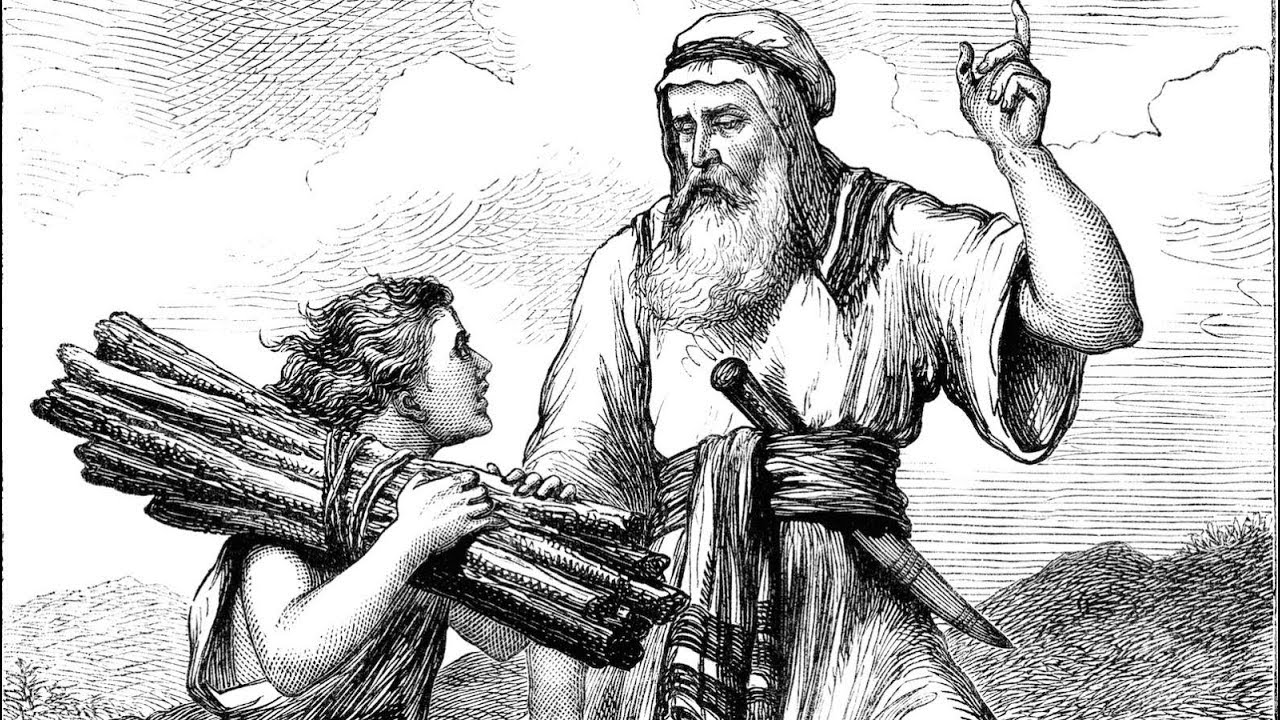
Søren Kierkegaard’s paradox of faith finds its most compelling illustration in the biblical story of Abraham and Isaac. This paradox challenges conventional ethics and rationality, presenting faith as a radical commitment to the divine that defies human logic. This paper explores the concept of Abraham’s paradox, analyzing how Kierkegaard’s Fear and Trembling presents Abraham as a “knight of faith” who suspends ethical reasoning to embrace an absolute trust in God. The paper further considers how Abraham’s paradox continues to influence existentialist thought and religious belief.
Faith, in its truest form, often appears paradoxical. Nowhere is this more evident than in the Akedah—the biblical story of Abraham’s near-sacrifice of Isaac. This episode, explored by Søren Kierkegaard in Fear and Trembling, exemplifies a central contradiction: Abraham, as a father, is expected to love and protect his son, yet he is commanded by God to kill him. By choosing obedience over ethics, Abraham enters what Kierkegaard calls the “teleological suspension of the ethical,” where moral law is transcended in favor of divine will. This paper examines the paradox of Abraham’s faith and its implications for existential philosophy and religious belief.
Kierkegaard presents Abraham as the ultimate example of the knight of faith—a figure who fully surrenders to God despite the irrationality of divine commands. Unlike a tragic hero, who sacrifices for a higher ethical principle, Abraham abandons reason itself and follows God’s will without question. This creates a paradox: Faith versus ethics, where traditional morality dictates that killing an innocent child is wrong, yet Abraham’s faith compels him to obey God’s command. By doing so, he demonstrates the ultimate test of faith: submitting to the absurd. Certainty in uncertainty, as Abraham does not know why God has commanded this, nor does he have assurance that Isaac will be spared. Yet, he proceeds with faith that God’s will is just, embodying what Kierkegaard calls the “leap of faith.” Personal isolation, since the knight of faith stands alone. Abraham cannot justify his actions to Sarah, Isaac, or society. Faith, in this case, is deeply personal and beyond rational communication.
Kierkegaard’s analysis of Abraham extends beyond theology into existentialism. His interpretation has several key implications: Faith as an individual struggle, where faith is not a communal or rational decision but an individual, existential choice. Abraham’s faith isolates him from societal norms and ethical reasoning. The absurdity of true faith, as faith requires embracing paradoxes and uncertainties. Just as Abraham obeys without understanding, true believers must navigate faith without absolute proof. Freedom through surrender, as Abraham’s paradox suggests that true freedom is found not in autonomy but in complete surrender to divine will, a concept later explored by existentialists such as Jean-Paul Sartre and Simone de Beauvoir.
The paradox of Abraham continues to challenge religious and philosophical thought. It raises questions about moral responsibility, divine authority, and personal conviction. In modern discussions, Abraham’s dilemma is often referenced in debates on the limits of religious obedience, ethical relativism, and the nature of true faith.
Abraham’s paradox, as articulated by Kierkegaard, presents faith as an ultimate act of trust that defies rationality and ethical norms. His willingness to sacrifice Isaac represents the most extreme form of devotion—one that challenges believers to confront the absurdity of faith. This paradox remains a powerful lens for understanding religious belief, existential philosophy, and the nature of human commitment to the divine.
References
- Kierkegaard, S. Fear and Trembling. Translated by Alastair Hannay, Penguin Classics, 1985.
- Evans, C. Stephen. Kierkegaard’s Ethic of Love: Divine Commands and Moral Obligations. Oxford University Press, 2004.
- Lippitt, John. The Routledge Philosophy Guidebook to Kierkegaard and Fear and Trembling. Routledge, 2003.
