

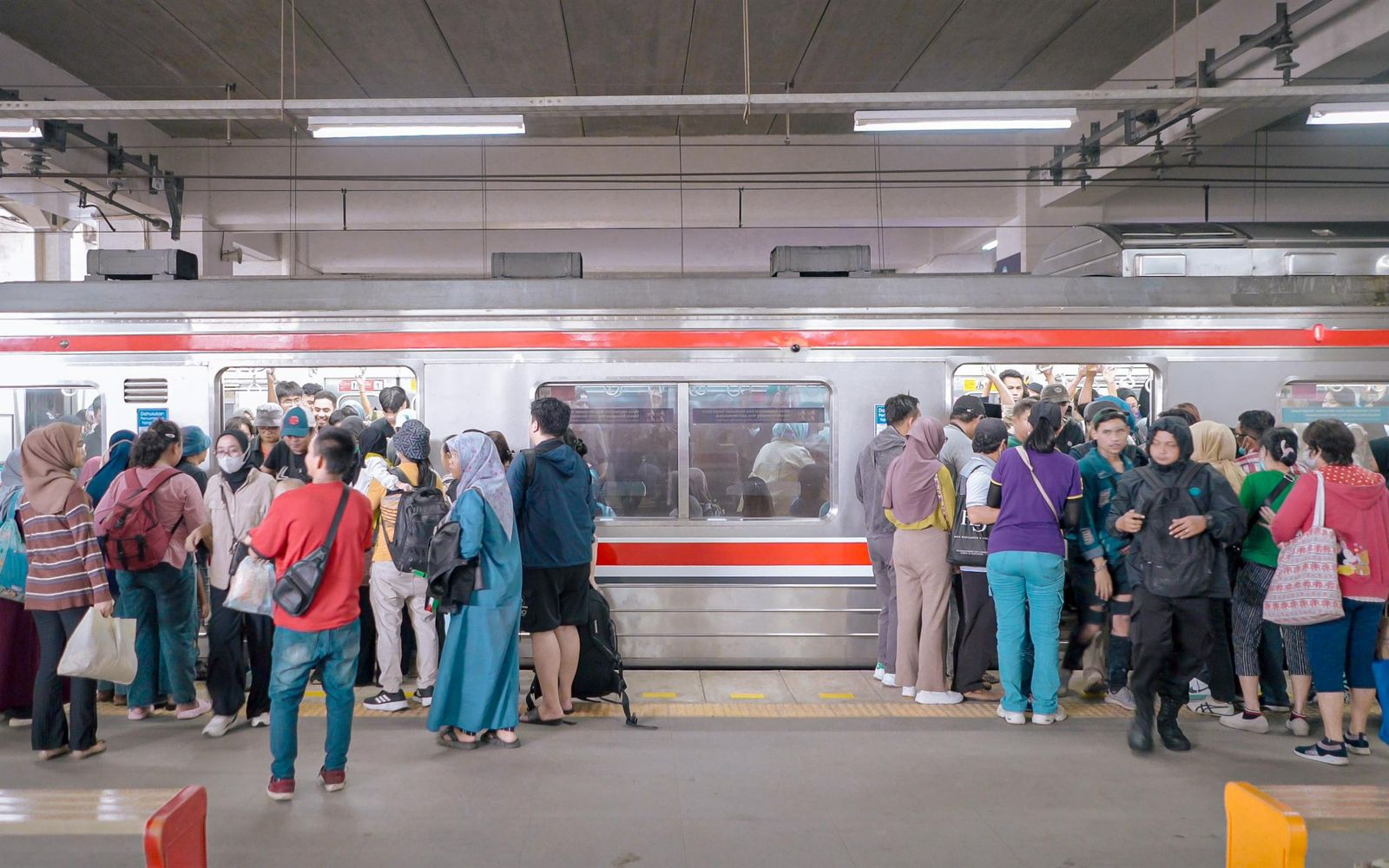
Every morning, packed commuter trains in Jakarta reflect the daily struggle of Indonesia’s middle class—exhausted workers relying on public transport funded by taxes deducted from their incomes. Despite being the backbone of the economy, they are burdened with high taxes, mounting expenses, and policies that fail to support them adequately. While they shoulder the country’s financial load, government initiatives often cater to either the elite or the underprivileged, leaving the middle class squeezed from both ends.
A Heavy Tax Burden
Indonesia’s middle class, comprising 66.35% of the population (178.35 million people), plays a crucial role in sustaining economic growth. However, they are subject to extensive taxation, including income tax, value-added tax (VAT), vehicle tax, property tax, and mandatory social security contributions. While taxes are essential for national development, many feel the system is unfairly skewed against them.
Unlike the wealthiest individuals and corporations who often benefit from tax incentives or loopholes, the middle class has no escape. The tax cuts and incentives given to high-net-worth individuals—such as the recently introduced family office tax benefits—stand in stark contrast to the increasing financial burden on ordinary workers. Meanwhile, lower-income groups receive state-funded assistance, including cash subsidies, free healthcare, and subsidized electricity and fuel, further widening the gap.
With nearly 30% of their earnings already going toward food expenses, middle-class households must also allocate funds for housing, education, healthcare, and loan repayments. The rising cost of living, combined with stagnant wages, has made financial security increasingly elusive for many.
The Gold Era: Past Prosperity, Present Strain
Indonesia’s “Gold Era,” which some associate with the rapid economic growth during the late 20th and early 21st centuries, painted an optimistic view of the middle class as a rising economic force. During this period, increasing access to education, technology, and infrastructure offered many a chance at social mobility and a more comfortable life. However, the golden age of middle-class prosperity seems to have passed, replaced by a more challenging financial landscape. While middle-class income has grown in nominal terms, the rising cost of living, high inflation, and limited wage growth have stretched resources thin.
Many workers now reflect on this “golden era” as a time of greater hope for upward mobility—when economic policies and the growing market created tangible opportunities. Today, however, this demographic faces the opposite: stifling taxation, underfunded public services, and policies that disproportionately benefit the wealthiest or poorest citizens.
Misplaced Priorities: Free Lunch, But at What Cost?
Rather than implementing policies that alleviate financial strain on tax-paying workers, the government continues to roll out costly populist programs. One of the most controversial initiatives is the proposed free lunch program for school children. While positioned as a solution to child malnutrition, the program has sparked concerns about its feasibility, sustainability, and funding sources.
Critics argue that such large-scale welfare programs should not come at the expense of the middle class, who already contribute disproportionately to the tax system. The question remains: why allocate billions to free lunches when public infrastructure, education, and healthcare remain underfunded? Addressing malnutrition is undoubtedly important, but is a free lunch program the most effective way to achieve this? Research suggests that targeted nutrition assistance, school meal subsidies, and family income support would be more sustainable and impactful than a blanket free lunch program that risks inefficiency and mismanagement.
Furthermore, Indonesia has a track record of financial mismanagement, as evidenced by scandals surrounding Asabri, Jiwasraya, and Taspen. Many fear that the free lunch program could suffer the same fate—poor oversight, corruption, and ineffective implementation—leading to wasted resources without meaningful results.
A more effective use of funds would be to strengthen Indonesia’s national health insurance program, BPJS, which has been struggling with budget deficits and service inefficiencies. By redirecting resources to BPJS subsidies, the government could ensure that middle-class families receive better healthcare coverage, reducing their financial burden for medical expenses. This would have a more direct and long-term positive impact on the well-being of workers and their families than a short-term free lunch program.
More productive alternatives exist. Strengthening vocational training, subsidizing higher education for middle-class families, or improving healthcare accessibility would yield long-term economic benefits. Instead of expanding dependency-driven programs, investments should focus on empowering the workforce, increasing productivity, and creating upward mobility for the middle class.
An Uncertain Economic Future
With an economic model heavily reliant on household consumption, Indonesia’s middle class plays a vital role in sustaining demand and driving growth. However, their purchasing power has weakened, leading to declining consumer spending and, in some cases, domestic deflation.
The Mandiri Spending Index (MSI) indicates a shift in household priorities, with spending on groceries rising from 13.9% to 27.4% of total expenses. This trend highlights the financial pressure faced by families, many of whom are cutting back on discretionary spending, further slowing down the economy.
Additionally, middle-class workers must contend with increasing financial obligations, such as home loans, vehicle loans, and educational expenses. Unlike wealthier individuals who can invest in assets that appreciate over time, many middle-class families are trapped in a cycle of debt, making it difficult to build long-term financial security.
A Call for Fairer Policies
Instead of increasing the financial strain on the middle class, policies should focus on creating economic opportunities and improving public services. Tax relief, higher wages, and better social security mechanisms are necessary to ensure the sustainability of this economic group.
A fairer approach would involve reassessing tax policies to ensure a more balanced distribution of obligations. Rather than continuously increasing taxes and mandatory deductions, the government should explore alternative revenue sources, such as improving tax compliance among corporations and high-net-worth individuals.
Furthermore, public spending should be directed toward strengthening infrastructure and services that benefit all economic groups. Investments in public transportation, healthcare, and education would provide tangible benefits to the middle class while supporting long-term economic growth.
The Middle Class at a Crossroads
The Indonesian middle class remains the country’s economic backbone, yet they continue to be overburdened with taxes and financial obligations. While government policies prioritize welfare programs for the underprivileged and tax breaks for the wealthy, the middle class is left to carry the weight of the nation’s economy with little support in return.
If left unaddressed, these challenges could lead to greater economic instability, reduced consumer spending, and long-term financial insecurity for millions. As the government plans future policies, ensuring a fair and sustainable approach for the middle class must be a priority—before their burden becomes too heavy to bear.
Reference
Badan Pusat Statistik (BPS). (2024). “Statistik Sosial dan Ekonomi Indonesia.” Retrieved from [BPS Website].
Mandiri Spending Index (MSI). (2024). “Trends in Household Consumption.” Bank Mandiri Research Division.
Ministry of Finance Indonesia. (2024). “Fiscal Policies and Taxation Report.”
World Bank. (2023). “Indonesia Economic Update: The Middle-Class Squeeze.”
Various news articles and government reports on Asabri, Jiwasraya, and Taspen financial management scandals.
