

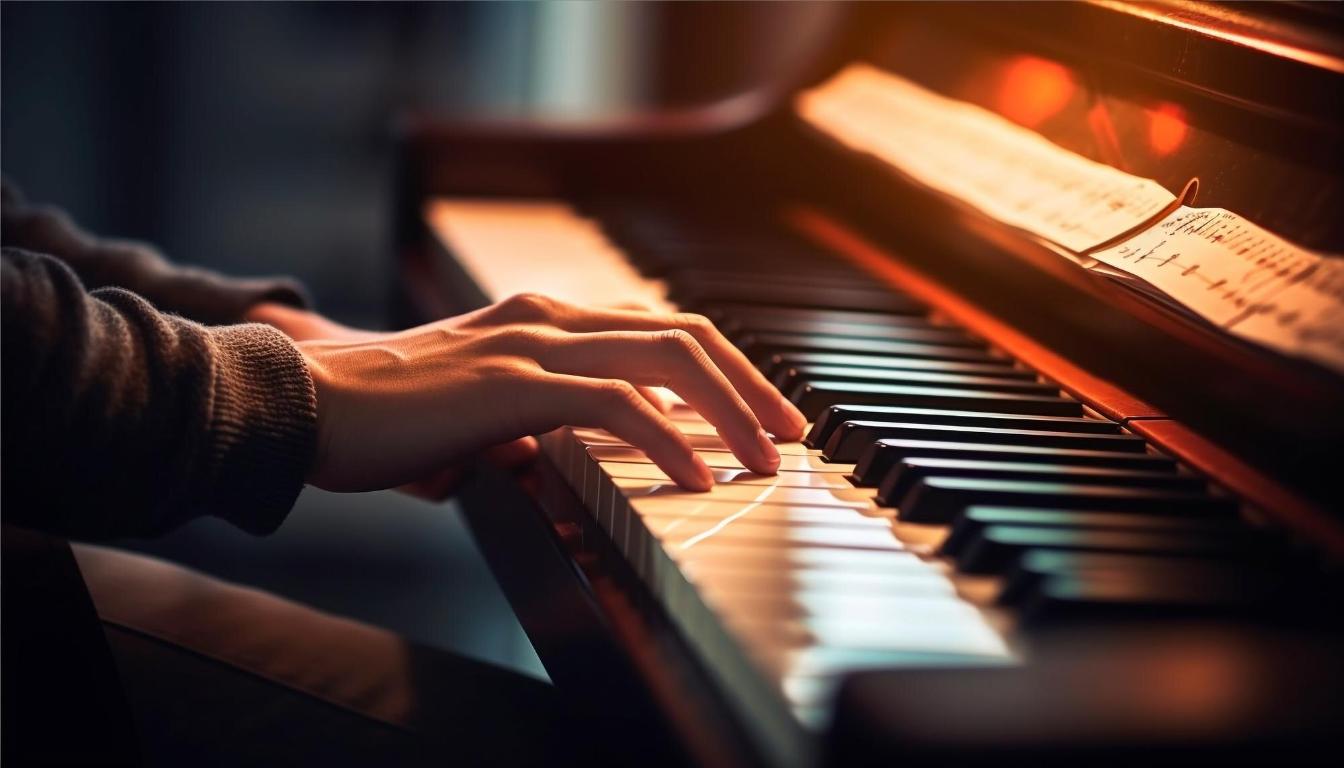
The piano is more than just an instrument; it is a profound medium through which human emotions, intellect, and creativity converge. Often called the “king of instruments,” the piano embodies a unique balance of complexity and accessibility, making it a vehicle for personal transformation and philosophical exploration. To learn and play the piano is to engage with life’s deepest questions about harmony, discipline, and self-expression.
At its core, the piano invites us to explore the interplay of chaos and order. Each key represents a distinct possibility, a universe of sound waiting to be unlocked. Yet, these possibilities are governed by structure—scales, chords, and musical theory. To master the piano is to find harmony within this balance, much like navigating the complexities of life. In pressing a key, one chooses a path, crafting a melody that resonates not only with the ears but with the soul.
The act of playing the piano is also a reflection of the philosophical pursuit of self-discovery. Every pianist, whether a beginner or a virtuoso, embarks on a journey to connect with their inner voice. Music becomes a mirror, revealing emotions and thoughts that often lie beyond the reach of words. In this sense, playing the piano is an act of mindfulness, a practice of being fully present in each note, each pause, and each transition.
From an existential perspective, the piano reminds us of the transient nature of time. Music exists only in the moment it is played, a fleeting yet profound experience that captures the essence of impermanence. As a pianist, one learns to embrace this ephemerality, understanding that each performance, like each moment in life, is unique and unrepeatable.
Moreover, the discipline required to learn the piano mirrors the philosophical idea of cultivating virtue. Aristotle’s concept of areté—the pursuit of excellence—can be seen in the hours spent practicing scales, perfecting technique, and interpreting compositions. This dedication transforms the pianist, not only enhancing their skills but also instilling patience, resilience, and a deep appreciation for the beauty of effort.
The piano also serves as a bridge between the individual and the universal. Music, as a universal language, transcends cultural and linguistic barriers, connecting people across time and space. When you play a piece by Bach, Beethoven, or Chopin, you are engaging in a dialogue with the past, interpreting the emotions and ideas of another era through your own lens. This dialogue reminds us of our shared humanity, a poignant realization in an increasingly fragmented world.
On a more metaphysical level, the piano can be seen as a symbol of duality—the interplay between black and white keys, silence and sound, tension and resolution. These dualities echo the yin and yang of existence, teaching us that life’s beauty often emerges from contrast and balance. A dissonant chord resolves into harmony, much like conflicts and challenges in life can lead to growth and understanding.
Finally, playing the piano is a celebration of freedom within constraints. While the instrument imposes certain limits—the fixed number of keys, the physical boundaries of the keyboard—it also offers infinite possibilities for creativity. This paradox reflects the human condition: we live within certain boundaries, yet within those boundaries lies the potential for boundless imagination and innovation.
In embracing the piano, one engages not only with music but with philosophy itself. It becomes a tool for exploring the nature of being, the passage of time, and the pursuit of meaning. Through its keys, we discover not just melodies but the profound truths that resonate in the depths of our souls. To play the piano is to live a life rich in reflection, connection, and joy—a testament to the enduring power of art and the human spirit.
